A Case Study by East Suffolk – Rose Gardening Group
What began as a small gardening service to support bereaved carers has grown into a thriving community space at Felixstowe Opportunity Group – welcoming families, children and people with additional needs, and proving that a modest grant can leave a legacy that lasts for decades.
Tucked into the front and rear gardens of Felixstowe Opportunity Group, the Rose Gardening Group has quietly become one of the town’s most valuable community assets. What started as a way to support people through grief has grown into an open, inclusive space where anyone – from toddlers to volunteers, from SEND families to local residents popping by after work – can dig in, connect with nature and feel part of something.
With backing from East Suffolk Council’s Field to Fork programme, the project shows what’s possible when a small amount of funding is matched with a lot of community drive.
Project overview
The Rose Gardening Group is hosted within Felixstowe Opportunity Group and was originally established as a gardening service to complement bereavement support groups. The aim was to create a safe outdoor environment where bereaved people and carers could connect with nature, improve wellbeing and spend time with others. Over time, the project evolved into a wider community space, welcoming adults, children, families and people with additional needs, while maintaining its strong focus on emotional wellbeing and support.
The project is also mindful of the different ways additional needs can show up, drawing on the four areas of SEN defined by the SEND Code of Practice:
- Communication and interaction
- Cognition and learning
- Social, emotional, and mental health
- Sensory and/or physical needs
Purpose of the project
The project was created to provide an accessible outdoor space where people could connect with nature, improve their wellbeing and take part in community activities. It seeks to remove barriers to gardening, recognising that growing food and flowers can often be expensive or inaccessible for many families. The project also aims to support people experiencing grief, social isolation or other life challenges by providing a welcoming and supportive environment.
A key objective was ensuring that gardening opportunities are available to everyone, including families, children, people with SEND, carers and those without access to their own growing spaces.
The growing space
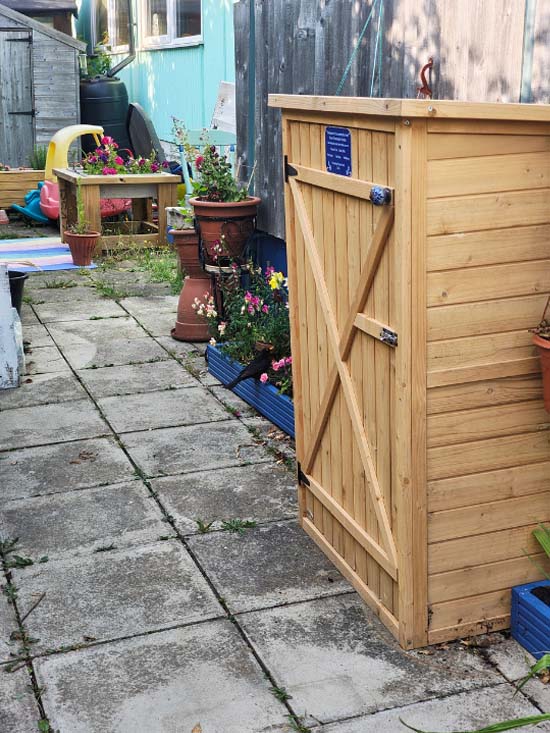
The project operates across both a front and rear garden. The front garden is an open community space, accessible to all local residents. It includes a strawberry patch and a community shed funded through the Field to Fork programme. Ring camera footage indicates that local residents use the space several times each week outside organised activities. The rear garden is primarily used for activities and events. Together, these spaces provide a valuable green environment in the heart of the community.
Where the funding went
- Community shed
- Raised growing beds
- Water butts
- Composters
- Plants and bulbs
- Growing equipment
The difference funding made
The Field to Fork grant was the group’s first successful funding award and provided the foundation needed to transform an idea into a functioning community asset. The funding helped purchase long-term infrastructure.
Investments were made with a 10+ year horizon, in order to create a lasting legacy. The funding also strengthened the organisation’s ability to secure further investment by creating a tangible project that demonstrated impact and community demand.
“Without it, we wouldn’t have had a leg to stand on.” – Lucy Turnell, Lead gardening volunteer
The community shed
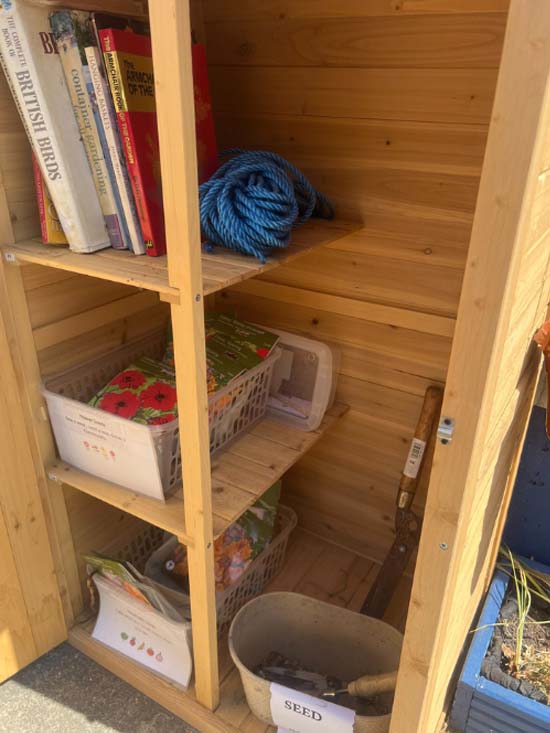
The community shed has become the highlight of the front garden, used two to three times a week by service users, other community members, and anyone who would like to share. It has facilitated seed exchange and knowledge sharing through book swapping – a small structure that captures the community spirit driving the whole project. As the sign on the shed puts it: “Take what you need, share what you can.”
Key achievements
- Establishing an open-access community growing space
- Delivering regular sessions and community events
- Increasing opportunities for community participation through affordable access
- Supporting wellbeing, social interaction and skill development
- Unlocking additional funding opportunities due to the project’s success and visibility
Activities and community engagement
The group runs two weekly sessions – one in the day and one in the evening — to maximise accessibility, with around 10 regular attendees.
The team also runs a wide range of themed, one-off events roughly once a month: a wellbeing day, pancake day, nature groups and, memorably, Carrot Day. These one-off events attract new visitors, with Bat Day and Carrot Day each drawing 20–30 children. The regular sessions maintain existing participation and relationships, while the themed events raise awareness and bring in new faces.
The project also encourages hands-on learning — children have made fruit ice lollies using strawberries grown right there in the garden.
Future ambitions
- Creating a wildflower garden
- A memorial garden
- Arts and crafts sessions
- Expanding volunteer capacity
- More workshops
Stories of change
One volunteer with a visual impairment regularly attended the garden. While she was unable to undertake some growing activities independently, she enjoyed helping with watering and valued the opportunity to spend time outdoors and be part of the community.
Another local resident, living in a flat, used the community garden to take part in planting, watering, painting and construction activities – engaging in gardening and creative activities that would otherwise have been unavailable to her.
Impact on health and wellbeing
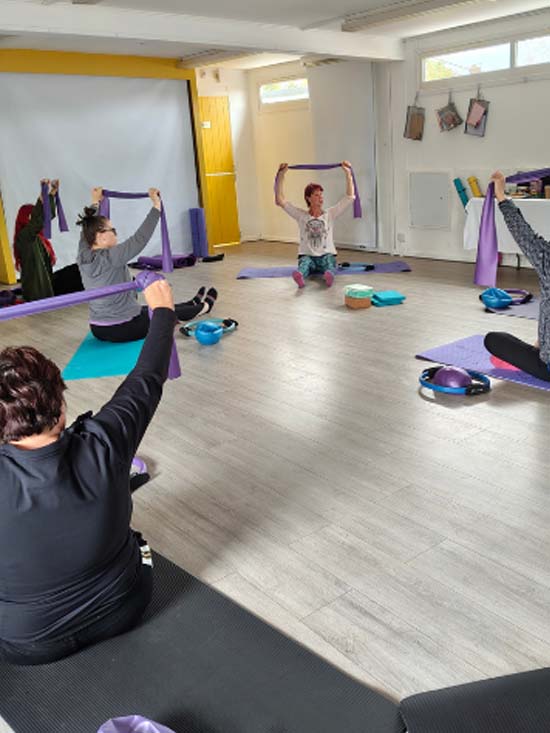
The garden has provided a safe, welcoming and supporting environment where people can improve their mental wellbeing through connection with nature and others.
Project leaders Lucy and Stevie emphasise that grief can take many forms beyond bereavement, and that the garden provides a space where individuals can process life’s challenges, build confidence and connect with others. Families increasingly view the space as a lifeline and a source of emotional support.
The project’s green environment has also become particularly valuable during periods of extreme heat and changing climate conditions, providing an oasis-like space for the community to come together.
Challenges and lessons learned
The biggest challenge faced by the project was a major programme of external works valued at approximately £100,000. These works took many months to complete and ultimately delayed aspects of the gardening project for almost a year.
The disruption also contributed to volunteer recruitment challenges, as organisers deliberately delayed volunteer promotion while construction activities were ongoing. Once the works were completed, attention shifted towards rebuilding volunteer capacity and raising awareness through local networks and volunteer events.
A key lesson has been the importance of adaptability. The team successfully adjusted plans, continued engagement activities where possible, and remained focused on their long-term vision despite the delays.
Sustainability and long-term legacy
Creating a long-lasting community resource has been central to the project’s approach. Investment has focused on durable infrastructure that will continue benefiting residents for many years.
The project is also exploring ways of becoming easier to maintain as climate conditions change. One proposal is to transform sections of the site into a wildflower garden, increasing biodiversity while reducing maintenance requirements and supporting pollinators.
The team believes community growing spaces will become increasingly important as climate change affects local environments and access to nature. The garden offers an attractive, green space that contributes to environmental sustainability while supporting community wellbeing.
Interested in volunteering? Rose’s Community Garden is looking for volunteers to help run its alternating Monday evening and Thursday morning sessions. Commitment to both sessions isn’t necessary, and neither is a green thumb – full support is given. Get in touch at rosesgardeninggroup@gmail.com.
Value for money
Project leaders believe the Field to Fork investment has delivered exceptional long-term value. A relatively small grant enabled infrastructure that will benefit the community for more than a decade, while also unlocking access to further funding opportunities. The project serves a broad range of residents, including children, families, SEND participants, carers and local community members. Beyond structured activities, facilities such as the community shed and garden space continue to provide value to residents throughout the week – and the site has also been made available for affordable community use, including birthday celebrations and family gatherings, further increasing its social value and accessibility.
“The funding has helped us realise our vision and turn an idea into something very real.” – Stevie Collin, Lead volunteer
This case study was supported by East Suffolk Council’s Field to Fork programme.